

Buliisa | Communities living near Murchison Falls National Park (MFNP) in Ongwedo Subcounty, Buliisa District, say human–wildlife conflict continues to endanger children’s access to education, with many pupils starting school as late as age ten due to fear of wild animals.
The most affected are children from Mubako and Kilyango villages, who for years have had to cross about seven kilometres through the park to attend Paraa Primary School, exposing them to frequent encounters with elephants, buffaloes, and other wild animals.
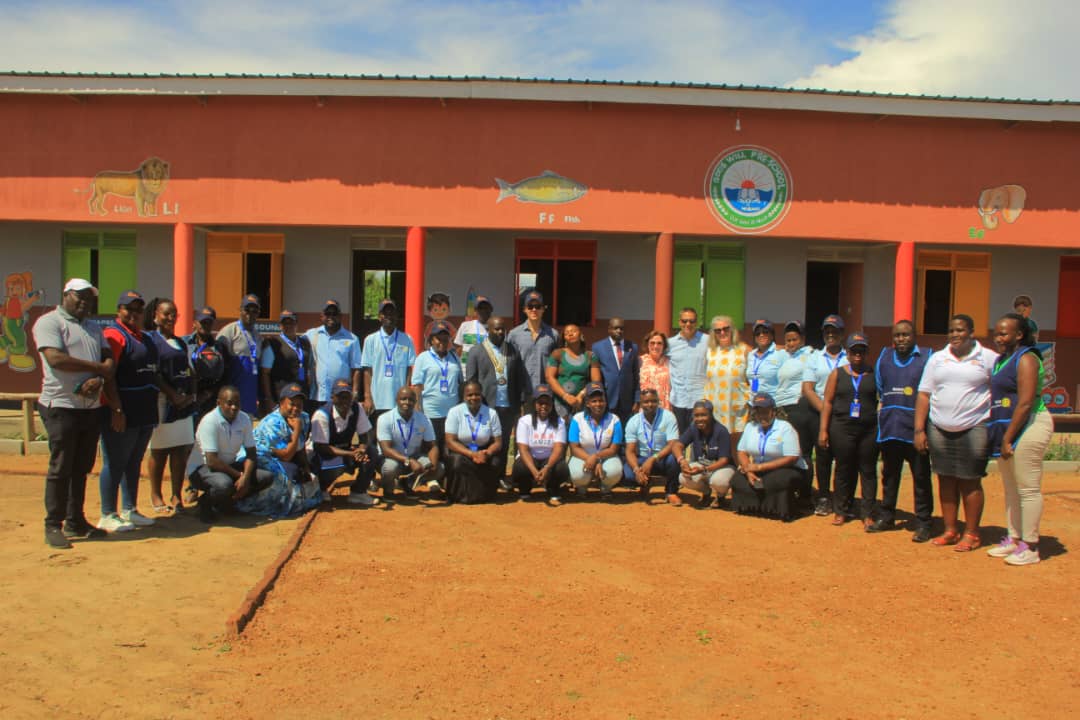
The challenge was highlighted during the commissioning of God’s Plan Pre-School — a new early learning centre constructed through a partnership between Empower and Shine, the Rotary Club of Maya, and the Arizona Community Foundation.
Founded by local resident Patrick Iguru, the school had operated under trees for three years before receiving the new permanent structure.
At the commissioning, Local Council I chairperson Richard Ochirchan praised the initiative, saying it would end the long and risky journeys children previously endured to access education.
“Our children used to start school at the age of seven to ten because they needed to be strong enough to walk long distances and identify dangerous animals in the park,” he said.
Ochirchan added that the situation had affected school completion rates, with many children marrying early before finishing their studies.
He urged parents to support the new school and prioritise education as “the best investment in their children’s future.”
Project coordinator Kenneth Kasule said the construction, which began in January 2025, cost about $80,000 (about Shs270 million).
The facility comprises five rooms — three classrooms, an office, and a storage room — furnished at a cost of Shs10 million.
It also includes a four-stance Ventilated Improved Pit (VIP) latrine and a 10,000-litre rainwater harvesting tank.
Maya Rotary Club founder Yusuf Kigoya, who presided over the event, thanked the community for providing land for the project.
He said Rotary prioritises basic education and literacy alongside environmental conservation and health services.
Ongwedo Subcounty Chairperson Kennedy Oringi applauded the donors for supporting education in the area, pledging that the subcounty would include the school in its local development plans.
He, however, urged parents to take responsibility for paying teachers’ wages to sustain operations.
Hoima Kitara Rotary Club president Catherine Murungi said her club would continue supporting the school by training teachers to improve the quality of education.
A resident who requested anonymity said the project was a long-awaited solution to years of difficulty.
“Our only school has been Paraa Primary, which is too far for children below seven years. Many start school when they are already old, and it becomes hard to keep them there,” she said.
School founder Patrick Iguru expressed gratitude to the partners for turning his vision into reality.
“This school gives hope to our children who had no safe place to learn,” he said, calling for continued support to strengthen the institution.
The newly built structure was officially handed over to the community, symbolising a shared commitment to improving education in the area.
However, the commissioning took place in the absence of the district education officer, Mr Tyson, leaving some questions about how the school will integrate into the district’s education framework.
